
Early Learning Is Racial Justice: Supporting Childcare Providers, Families, and Equitable Policy
Access to safe, affordable, and culturally responsive early learning is not a privilege—it is a foundation for racial equity, community stability, and collective liberation.
At RE:START Washington, we believe that supporting early learning and childcare is essential to building strong, resilient communities. For families navigating economic instability, immigration barriers, systemic racism, and intergenerational trauma, early learning is often the difference between surviving and thriving. For providers—many of whom are women, immigrants, and people of color—childcare is both vital care work and deeply undervalued labor.
The Reality for Families and Providers
Across Washington, families face impossible choices: unaffordable childcare costs, long waitlists, limited hours, and programs that don’t reflect their language, culture, or lived experiences. These challenges disproportionately impact Black, Indigenous, immigrant, refugee, and low-income communities.
At the same time, early learning providers are stretched thin. Many operate on razor-thin margins while carrying immense responsibility—nurturing children, supporting families, and holding communities together. Despite the essential nature of their work, providers often lack fair wages, benefits, and long-term stability.
This is not accidental. It is the result of policy decisions that have historically treated care work as invisible and expendable.
Our Approach: Community-Led Solutions and Policy Change
RE:START Washington works alongside families, childcare providers, and grassroots leaders to push for policies that reflect the real needs of our communities. Our work is grounded in the belief that those most impacted by inequitable systems must lead the solutions.
We focus on:
Centering providers’ voices in policy conversations that affect wages, licensing, and working conditions
Advocating for equitable early learning funding that prioritizes vulnerable communities
Supporting culturally responsive childcare models that affirm identity, language, and belonging
Building collective power so families and providers can influence decision-making at the local and state level
Through organizing, education, and coalition-building, we work to ensure early learning policies are shaped by lived experience—not just spreadsheets and systems.
Care Work Is Infrastructure
Early learning is critical infrastructure. When childcare systems fail, parents—especially women and caregivers of color—are pushed out of the workforce, economic inequities deepen, and communities suffer. When childcare is supported, families gain stability, providers gain dignity, and children gain the opportunity to grow in safe, nurturing environments.
Investing in early learning is investing in racial justice, economic justice, and the future of our communities.
Looking Ahead
RE:START Washington will continue to advocate for early learning policies that value care work, protect providers, and expand access for families who have been historically excluded. We are committed to building systems that prioritize people over profit and care over punishment.
Because when we support our youngest community members and the people who care for them, we create pathways toward liberation for everyone.
Immigration Justice & Community Safety
RE:START Washington is committed to protecting immigrant communities and advancing safety, dignity, and justice for all—regardless of immigration status. We believe no one should live in fear simply for existing in their own neighborhood. Our work focuses on community education, rapid response, and grassroots organizing that empowers residents to protect themselves and one another in the face of harmful immigration enforcement.
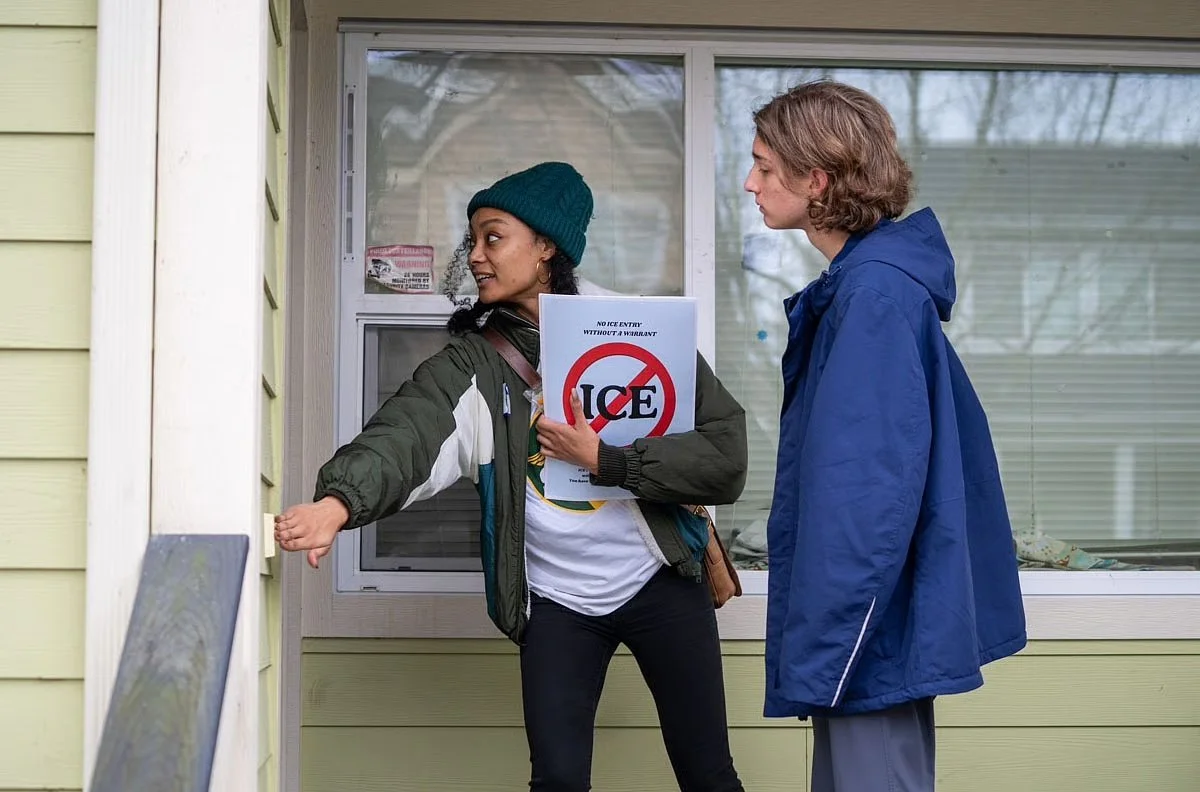
In December, following a confirmed Immigration and Customs Enforcement (ICE) apprehension near the New Holly neighborhood, RE:START Washington partnered with community-based organizations and grassroots leaders to take swift, collective action. A video circulating on social media showed unidentified immigration enforcement agents detaining a person along Martin Luther King Jr. Way South, escalating fear and anxiety among nearby residents.
Within a week, community members organized a door-to-door outreach effort to ensure neighbors had accurate information and practical tools to respond to immigration enforcement. Volunteers shared Know Your Rights materials, safety resources, and information on how to remain silent, refuse entry without a valid judicial warrant, and contact local rapid-response networks.
Over 50 volunteers gathered at East African Community Services before canvassing several hundred homes across the neighborhood. In addition to educational flyers and posters, volunteers distributed whistles—part of a community-based safety strategy used in other cities to quickly alert neighbors when immigration enforcement activity is observed. These tools help draw public attention, discourage unlawful practices, and remind residents they are not alone.
Face-to-face outreach remains central to our organizing approach. Conversations at the door foster trust, strengthen relationships, and build collective power. Many residents shared that they were already coordinating with neighbors through group texts and informal networks—evidence of a community actively protecting itself.
As one organizer shared, fear is real—but so is solidarity. By showing up together, sharing knowledge, and building systems of care, community members are sending a clear message: our neighborhoods are places of belonging, not fear.
RE:START Washington will continue to support immigrant communities through education, organizing, and partnerships that uphold safety, human dignity, and collective liberation across Washington.